Prayer in the Dry Places: From Emotional Awareness to Discernment


Learning to listen to what I feel with God
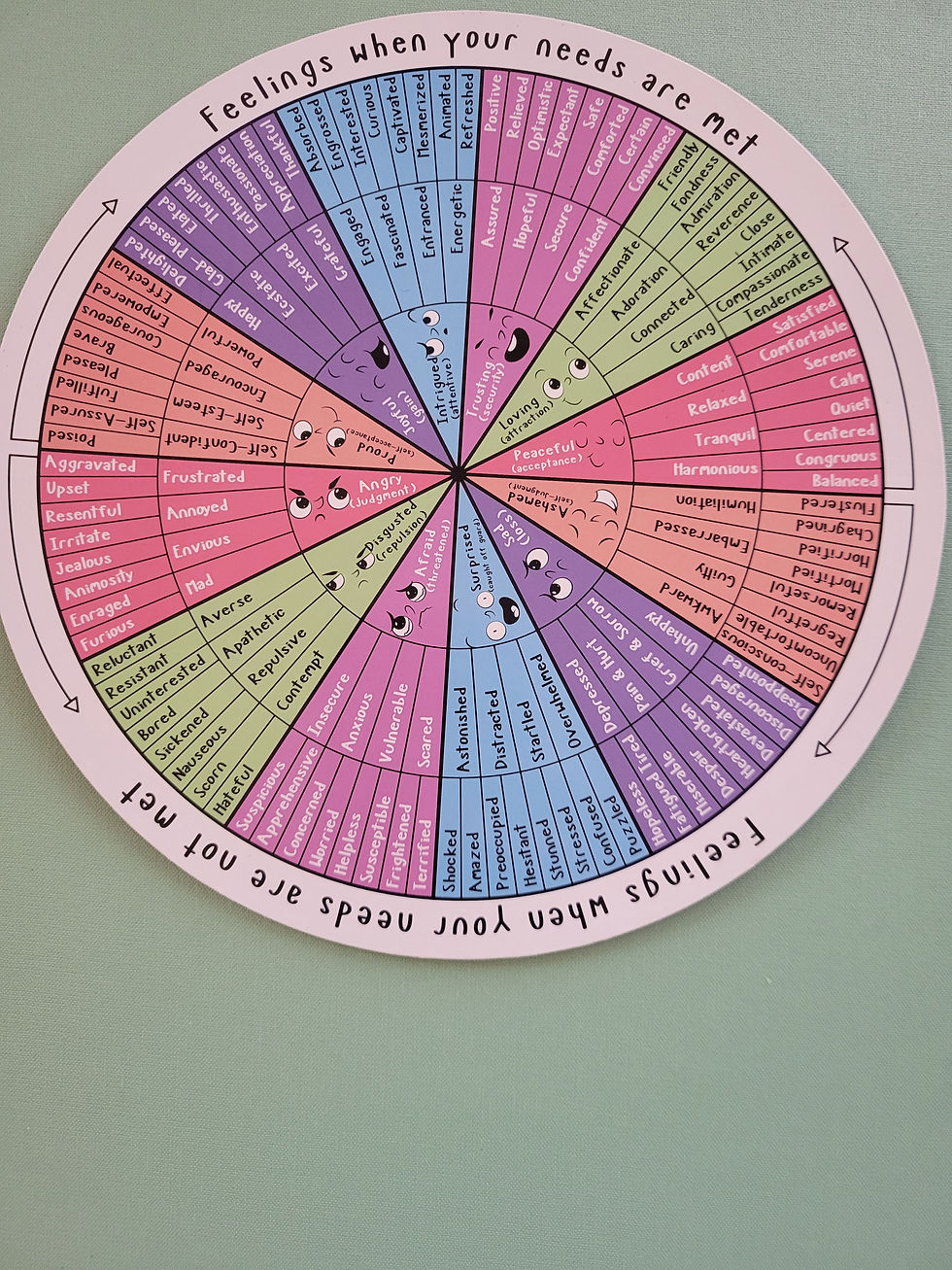
Last week, I invited you to bring an emotions wheel into prayer and begin with a deceptively simple question: What am I feeling today?
We practiced prayer in the dry places by becoming curious, naming what was present, and naming it more specifically. We noticed where an emotion lived within the body. And we gazed across the wheel, noticing a grace that caught our attention. Then we stopped there. We weren’t trying to change anything - to turn anger into peace, sadness into joy, anxiety into trust, or dryness into consolation. We were simply learning the landscape of our own Garden Within.
This week, I want to stay with what we found. Because once I become aware of what is moving within me, another question begins to emerge: Can I learn to listen to what I am feeling with God?
Prayer in the Dry Places: When Anxiety Is Already Here
This weekend, I was accompanying my husband in his own discernment about his future within our faith tradition and what that might look like. One passage we were invited to pray with was Philippians 4:6–9. Because discernment with another person is never entirely about the other person, the passage began working on me too.
Paul begins with an invitation to “have no anxiety at all” and, instead, through prayer, petition, and thanksgiving, make our requests known to God. I stopped there because what happens when anxiety is already present? What if I come into prayer carrying a request, and anxiety is sitting right beside it?
I don’t experience Paul’s words as an instruction to get rid of my anxiety before approaching God. I can’t always do that, nor do I think I need to. Instead, I hear an invitation to bring what is actually present into relationship. God, here is my request. And God, I am anxious. Both are welcome to the conversation.
Prayer in the Dry Places Keeps God in the Conversation
I often return to the image of God walking with Adam and Eve in the Garden. Other voices were in that Garden too. For me, what has always stood out in that story is not simply that the serpent spoke. It is that, somewhere along the way, God was no longer part of the conversation. That gives me an image for my own Garden Within.
Many things speak within me: fear, woundedness, memory, desire, anxiety, and grace. And my body responds to what speaks. Discernment is not about deciding which parts of me are allowed to speak and silencing everything else.
Discernment is learning to listen to everything within me while keeping God in the conversation.
That changes how I understand anxiety. Anxiety does not need to be demonized. Rather, can it be a messenger? My nervous system may be trying to tell me something important. My body may recognize that I am overloaded before I am willing to admit it. Anxiety may reveal fear, pressure, uncertainty, a need for safety, or something within me that needs attention. The question becomes not, How do I stop feeling this? But: God, will You help me listen to what is happening here?
Prayer in the Dry Places: Anxiety Does Not Have to Speak Alone
Let’s return to the emotions wheel.
If I begin with afraid and become more specific, I may discover that what I am experiencing is anxiety. Now I know something about the disposition I am bringing into prayer. When I look across the wheel from anxious, I find hopeful, which moves inward toward the larger experience of trusting. Last week, we simply noticed those corresponding words. This week, let’s go a little deeper.
Hope does not need to replace my anxiety. I don’t need to leap across the wheel and become trusting. Instead, perhaps I pray: God, I am anxious. I hear something within me asking for my attention. Help me listen. And while anxiety is here, give me enough hope to remember that I am not alone.
Now something has changed. Anxiety is still part of the conversation, but it is no longer the only voice in the conversation. God is here too. Could that be one way we begin to experience the peace Paul describes, the peace of God that surpasses our understanding and guards our hearts and minds?
Peace doesn’t necessarily mean my anxiety disappears. Might it invite the growing recognition: I am accompanied here?
Prayer in the Dry Places Can Hold Anxiety and Hope Together
There was a time when I became incredibly anxious before leading retreats. I could become so anxious that it was almost debilitating. But I didn’t really listen to it. Instead, I slipped easily into my need to please, and I powered through. I needed to be here. I needed to perform. I wanted everyone to have a meaningful experience. Somewhere within me was the pressure that perhaps I could make that happen if I just worked hard enough, prepared enough, gave enough. And my body was trying to tell me something. This is too much. You are overloaded. Pay attention!
At the time, I tended to treat anxiety as something I needed to overcome so that I could do what I was supposed to do. Today, I wonder what might have happened if I had listened differently. Not obeyed the anxiety or pushed it away. Rather, listened to it with God.
Would I have recognized the pressure and the desire to please that were moving underneath? Could I have allowed that pressure to invite me to step away for a few minutes of self-care? And in that time, made my request known to God: Help me! Help me hold this desire to please. Help me remember what belongs to me and what belongs to You.
Within that space of prayerful openness and dependency, I have come to understand the messenger that begs me to ask for the grace of hope and trust. Not trust that I would perform perfectly. No, hope and trust that I didn’t have to manufacture someone else’s encounter with God - this is actually completely out of my control! Hope and trust that I could have limits and God could still work. That I could care for myself without abandoning the people I had come to serve. This is very different from telling myself, “Stop being anxious and trust God."
Prayer in the Dry Places Creates Room to Hear More
Philippians doesn’t end with making our requests known to God. Paul continues by turning our attention toward whatever is true, honorable, just, pure, lovely, gracious, and worthy of praise. I find that movement beautiful because when I am consumed by anxiety, anxiety can become my entire field of vision. But when I name it and bring it into relationship with God, something begins to open.
I can ask: What is true here? Perhaps it is true that I am overloaded.
What is lovely here? Is it my genuine desire to serve the people before me?
What is gracious? Could it be the realization that God is already present with those people and their transformation does not depend entirely upon me?
Anxiety has not disappeared. But now I can see more than anxiety.
Emotional awareness doesn’t tell me what God is saying. It creates room for me to listen.
And that room matters.
Prayer in the Dry Places Eventually Becomes Response
The passage continues again. Paul invites the community to keep doing what they have learned, received, heard, and seen. There is movement toward action. This is where emotional awareness begins becoming discernment.
I notice what is present. I bring it into relationship with God. I become curious about what else God is helping me see. And eventually, I respond:
Maybe I need rest.
Maybe I need a conversation.
Maybe I need to ask for help.
Maybe I need to set a boundary.
Maybe I need to keep going, but without carrying responsibility for the outcome.
The emotions wheel cannot tell me which response is right. Anxiety cannot tell me by itself. Even the grace I notice across the wheel does not make the decision for me. But all of it becomes part of the conversation I am having with God. And slowly, I become more practiced in recognizing the disposition from which I am listening.
An Embodied Pause for Prayer in the Dry Places
Settle into a comfortable position. Allow your feet to meet the ground. Take a slow breath.
Bring to mind something you have been carrying lately, perhaps a request you have already been making of God.
Now notice your body. What happens as you hold that request?
Without trying to change anything, find a word on the emotions wheel that comes close to what you are experiencing. Become more specific if you can.
Then pray: God, this is here. Help me listen to what it is telling me.
Now look across the wheel. Is there a word there that catches your attention? Don’t reach for it or try to become it. Simply allow it into the conversation.
God, what might this grace make possible here?
Stay for a few breaths. Let God walk with you among everything growing in your Garden Within.
Journaling Through Prayer in the Dry Places
What emotion has been asking for my attention lately, and what might it be trying to tell me?
When I bring that emotion into conversation with God, what else becomes possible for me to notice?
What grace catches my attention across the emotions wheel, and what might it mean for that grace to live alongside what I am already feeling?
A Closing Prayer
God who walks with me in my Garden Within, help me listen to all that is moving here without allowing any one voice to become the whole conversation. Meet me in what I feel. Give me hope enough to remember I am accompanied, peace enough to listen, and freedom enough to respond. And mostly, keep walking with me. Amen.
From the garden within me to the garden within you, where God awaits,
Kimi


Comments