Responding to God’s Call: Which Voice Will Guide My Response?


Responding to the Call: Love in Action, Part Two
Have you ever agreed to something before you even considered whether you wanted to? Perhaps someone asked for your help, invited you to participate, or needed you to take on another responsibility, and before you could stop yourself, the words were already forming: “Of course! I’d be happy to.”
But somewhere within you, another conversation had already begun. What if I disappoint them? What if they don’t ask me again? What if they think I’m selfish?
I know this conversation well. After nearly ten months together tending our Garden Within, learning to recognize our emotions, wounds, desires, and the movements of God’s grace, I wonder whether we’re ready to ask another question.
When I respond to someone, which voice within me is guiding that response?
Because responding to God’s call isn’t simply about recognizing His invitation. It’s about letting what we’ve encountered in our relationship with Him shape the love we offer others. Sometimes that begins by recognizing that more than one voice is speaking within us.
Responding to God’s Call: An Encounter at the Well
One of my favorite encounters with Jesus takes place in John’s Gospel, where Jesus meets a Samaritan woman at a well. She’s come to draw water, something she has undoubtedly done many times before. But on this particular day, an ordinary task becomes an extraordinary encounter. Jesus begins by asking her for a drink.
Their conversation unfolds around water, thirst, worship, and her circumstances. I find something so beautiful about the way Jesus encounters her. He doesn’t avoid the difficult realities of her life. He doesn’t pretend they aren’t there, and He doesn’t reduce her to them. He remains in conversation with her. He invites her to recognize something beyond the water she came to collect: the living water He offers.
I often pray with this encounter through the lens of the voice of woundedness and the voice of healing; it has been a Scripture that has accompanied my woundedness throughout the many years Jesus has drawn water from me. I imagine the experiences this woman may have carried with her to the well. There were places of loneliness, rejection, shame, or fear. Scripture doesn’t tell us everything she felt, but imaginative prayer invites us to enter the encounter and notice what arises within our own hearts. And there is Jesus.
He does not wait for her to become someone else before He speaks with her, nor does He require her to resolve every difficulty in her life before she can encounter His love. He meets her there.
The places within us that need healing are the very places where we encounter Jesus most intimately.
Then something remarkable happens. The woman leaves her water jar and returns to her community. She invites others to come and encounter the One she has met. Think about that for a moment.
She hasn’t been given a detailed plan for the rest of her life. We aren’t told that every wound has healed or every difficulty has disappeared. But something has moved within her. The encounter becomes an invitation to respond, and the living water she has encountered begins to flow outward.
Responding to God’s Call: Remembering Who Is in the Garden
Sometimes, when I pray imaginatively with Adam and Eve in the Garden of Eden, I find myself wondering about the moments before the serpent approaches. Now, this is imaginative prayer, not an account of what Scripture tells us happened.
I wonder whether some ordinary human vulnerability was present. Perhaps an insecurity, a misunderstanding, or a moment of feeling inadequate. Then comes the serpent, offering the promise of knowledge: “You could know more. You could have the answers.”
How tempting that might sound to someone already feeling vulnerable! What interests me most in this prayer isn’t simply the temptation itself. It’s the possibility that Adam and Eve become so absorbed in the serpent’s voice that they lose sight of something extraordinary.
God is also in the garden.
He hasn’t disappeared, nor has His presence ceased. But another voice has captured their attention. My friends, I have been there. Have you?
Something happens, and suddenly the voice of fear, inadequacy, resentment, or self-protection becomes so loud that it’s difficult to recognize anything else. We begin responding from that voice before we’ve even considered what might be happening within us. And yet, God is still in the garden. This is what I want us to remember as we begin responding to God’s call in our everyday relationships.
The voice of woundedness may be speaking, but it isn't the only voice in our Garden Within.
We can acknowledge that voice without allowing it to determine every response. We can invite Jesus into the conversation.
Responding to God’s Call: When Fear Wants to Please
Let me offer a personal example.
As a retreat leader, I sometimes receive invitations to lead a retreat, speak at an event, or participate in a ministry. These are beautiful invitations, and I am deeply grateful for them. But sometimes, when an invitation arrives, I recognize a familiar movement within me. Before I’ve considered my schedule, my responsibilities, or whether I have the capacity to say yes, I feel the desire to please.
What if I disappoint them?
What if they never invite me again?
What if someone else takes my place?
Do you recognize that voice?
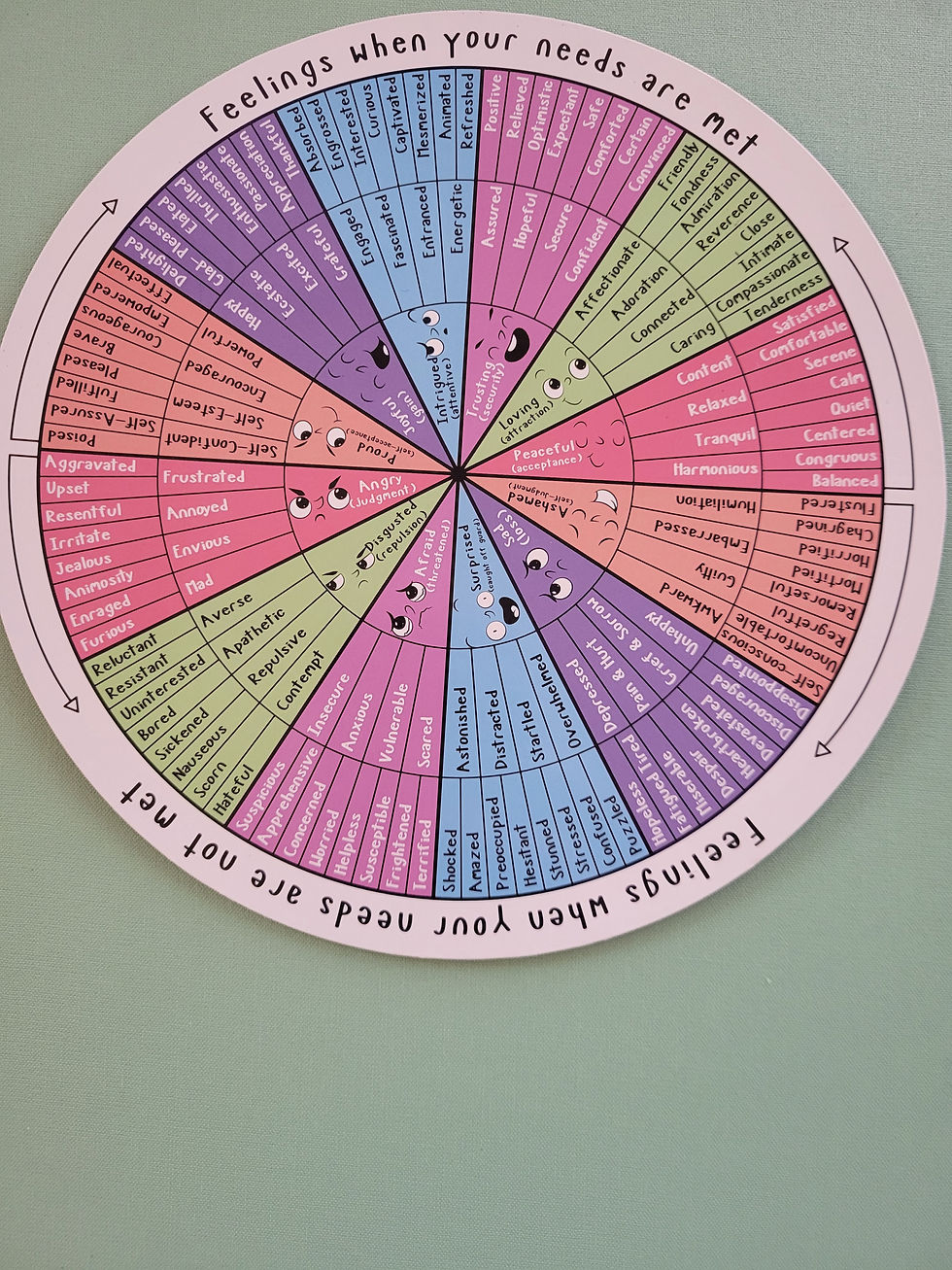
For me, it’s connected to places of woundedness I’ve spent a lot of time encountering with Jesus. This is where our emotions wheel becomes so helpful. I begin by naming what I’m experiencing - I am afraid.
As I explore that emotion more deeply, I recognize vulnerability. Beneath that vulnerability, perhaps helplessness (follow along on the emotions wheel to see how I arrived). I feel afraid of disappointing someone. Vulnerable to their reaction. Helpless, driven by the desire to make everything okay.
Now, I could respond immediately from that place and have! I could say yes because I fear what might happen if I say no. I could become frustrated with myself for feeling this way. Neither response necessarily brings me greater freedom. Instead, I can pause.
I can acknowledge the frightened part of myself without judging it. I see you. I understand why you’re afraid. Then I can look across the emotions wheel, toward the graces I might desire:
Trusting.
Secure.
Safe.
Comforted.
What beautiful words to bring into prayer! “Jesus, I feel afraid; I worry that saying no will disappoint someone. Can You help me feel safe here? Can You remind me that my worth doesn’t depend on whether I am asked again? Can You help me trust that I can love someone even when I cannot give them what they are asking?”
Notice what is happening. I’m not trying to silence the voice of woundedness. Instead, I’m letting it be heard. But I’m also making room for the voice of healing. As I remain with Jesus, something begins to soften if I can remain. The fear may still be present. I may still feel vulnerable. But I might also begin to recognize that I am safe enough to respond honestly.
I can listen compassionately to the voice of my woundedness without asking it to make my decisions.
Maybe this makes space for my response to be yes; it also makes equal space for my no. Increasingly, I desire that response to come from freedom and love rather than fear. That changes not only what I decide, but how I encounter the person who has invited me.
Responding to God’s Call: Practicing with the Psalms
If you’ve been journeying with me through Echoes From Eden, you know how deeply I love the Psalms. We’ve explored how they give us permission to bring our entire emotional lives into conversation with God: our anger, grief, fear, and longing.
Even the thoughts and feelings we might hesitate to bring into prayer are welcomed. But I’ve also discovered that the Psalms offer us a beautiful place to practice responding. Because sometimes the Psalms provoke me!
I encounter a passage filled with anger or a desire for revenge, and something within me immediately reacts. Wait a minute! They want God to do what?
There I am, standing before my own interior movements. I could feel judgment rising, or encounter discomfort with the psalmist’s image of God. I might want to correct the words before I’ve even listened to the suffering beneath them.
As a spiritual director, I’ve learned how important it is to recognize these reactions. Years ago, during continuing education, we were given an unusual exercise. We were asked to practice spiritual direction using the lyrics of a popular rapper. The lyrics were difficult to encounter, and my initial reactions were strong. But the exercise invited me to consider something important: Could I listen to what this person was expressing without allowing my discomfort to become the center of the conversation? Could I recognize my own reaction and still remain available to the person before me?
That experience stayed with me because the people we encounter in life don’t always express their suffering in ways we find comfortable. Sometimes their words are angry, their understanding of God is painful or distorted, or their experiences awaken something unresolved within us.
If we’re unaware of what is happening inside ourselves, we may respond from defensiveness, judgment, or a desire to fix them. But we can practice something different - we can notice what has been stirred within us and bring that movement into conversation with Jesus. There, we can ask for the grace to listen with greater compassion.
The more honestly I recognize what is happening within me, the more room I can make for what is happening within another.
The Psalms give us a place to practice this. Not by pretending we agree with every word, but by staying present long enough to recognize the human experience brought before God. We come to the well with our vessel of collecting water and leave it behind to run back into community with living water dripping from our lips.
Responding to God’s Call: Leaving the Water Jar Beside the Well
Let's return to the Samaritan woman. I keep imagining that water jar resting beside the well. She came carrying something she needed for daily life. After encountering Jesus, she leaves it there as she returns to her community. I wonder what I might be invited to leave beside the well:
The need to please everyone.
The fear of disappointing someone.
The desire to correct another person’s understanding before I’ve truly listened.
The belief that I must heal every wound within myself before I can witness God’s love.
Here’s what I invite us to remember. The jar doesn’t disappear; it’s still there. And the places within us that need healing don’t necessarily disappear either. Some wounds heal over time. Others continue inviting our attention. Sometimes healing reveals something deeper that we hadn’t recognized before. Our interior work continues throughout our lives - we will return to the well and drink from the vessel we left behind. This reminds us not to wait until everything within us is resolved before we can respond to God’s call. We begin now; we run forth from the encounter with living water, letting it spill from us.
We can acknowledge the voice of woundedness, invite Jesus to meet us there, and allow His voice of healing to guide our response again and again. Then we can return to the people and communities of our lives again and again. Not because we have become perfectly healed, but because we have encountered Love again and again.
We don’t have to finish healing before we can become witnesses to the One who heals.
An Embodied Pause: Responding to God’s Call with Greater Freedom
Find a comfortable place to sit, and let your feet rest on the ground. Take a few gentle breaths.
Bring to mind a conversation, invitation, or situation that is asking something of you. Perhaps it’s an email you haven’t answered, or a relationship in which you feel responsible for keeping everyone happy. Could someone’s words or actions have stirred a strong reaction in you?
Notice what happens in your body as you bring this situation to mind. Is there tightness in your chest? A heaviness in your stomach? A desire to withdraw, defend, please, or fix? Without judging what you discover, name it.
Jesus, this is what I’m experiencing.
Now imagine yourself sitting beside the well with Him. Allow the voice of woundedness to speak:
What is it afraid of?
What does it need?
What is it trying to protect?
Then gently invite Jesus into that place. How might You meet me here? What grace might help me respond more freely?
Do you desire trust, safety, comfort, courage, or patience? Remain with Him for a few moments.
There is no need to force a particular feeling or decision. Simply notice whether another possibility begins to emerge. And when you’re ready, consider: What might I leave beside the well as I prepare to respond to this person, situation, or circumstance?
Journaling: Which Voice Is Guiding My Response?
Where do I recognize the voice of woundedness influencing my responses to others? Using the emotions wheel, what feelings can I name, and what actions do they sometimes lead me toward?
How might Jesus meet me in those emotions? What grace do I desire (look across the wheel), and what might His healing voice invite me to recognize about myself and the person before me?
What is one response I could practice from greater freedom and love? Is there a conversation, invitation, or relationship where I might pause, listen, and let Jesus accompany me before I act?
A Closing Prayer
Jesus, who meets me beside the well, You know the places within me that still carry fear, hurt, and longing. Thank You for meeting me there, not with judgment, but with mercy and love. Help me recognize the voices that move within my Garden Within. Teach me to listen with compassion to the places that need healing, while remaining open to Your gentle invitation.
When fear urges me to please, when anger invites me to defend, or when judgment makes it difficult to listen, remind me that You are also in the garden. Give me the freedom to leave beside the well whatever keeps me from responding in love. And may the living water I encounter in You flow outward through my words, my decisions, and my presence with others. Amen.
From the garden within me to the garden within you, where God awaits,
Kimi


Comments